1 / 3
About this destination
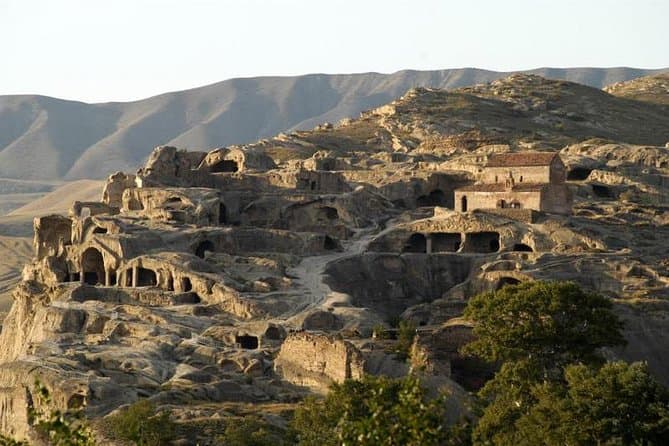
Carved into volcanic rock over 3,000 years ago, Uplistsikhe is one of Georgia's oldest urban sites — pagan temples, secret tunnels, and sweeping views of the Mtkvari River all in one place.
Carved into volcanic rock over 3,000 years ago, Uplistsikhe is one of Georgia's oldest urban sites — pagan temples, secret tunnels, and sweeping views of the Mtkvari River all in one place.
Most people drive past Uplistsikhe without realizing what they're looking at. From the road near Gori, it's just a strange, pockmarked cliff above the Mtkvari River. Get closer, and an entire city opens up inside the rock.
Uplistsikhe (roughly pronounced oop-lis-tsi-kheh, meaning "Lord's Fortress") was already a thriving urban center when the ancient Greeks were building the Parthenon. The earliest settlements here date to the early Iron Age — around the 10th century BC — and the city kept evolving, growing, and reinventing itself for well over a thousand years.
At its peak, it housed thousands of residents and sat at the crossroads of Silk Road trade routes threading through the Caucasus. That's not background noise — it shaped everything carved into these walls.
The site is compact but surprisingly layered. You walk up a worn stone path and step into a network of more than 700 rooms, halls, and corridors cut directly into the volcanic rock. Some spaces are enormous — the main hall, sometimes called the "Tamaris Darbazi" (Tamar's Hall), has a coffered ceiling carved with the same precision you'd expect from a palace builder.
What makes Uplistsikhe genuinely strange is the collision of belief systems inside it. Pagan temples from the pre-Christian era sit side by side with a 9th-century Christian basilica built right on top of an older shrine. Nobody bothered to tear the old stuff down — they just layered new faith over old stone. You can read the centuries in the walls.
There are also pharmacy rooms where archaeologists found traces of medicinal herbs, a theater-style space that may have hosted ritual performances, and a long tunnel that once led directly to the riverbank — a secret exit for when things got difficult.
Practical tip: Bring water. The site has no shade and the rock radiates heat in summer. Go early morning or late afternoon to avoid the worst of it, and to catch the light on the cliffs at its best.
Uplistsikhe sits about 10 km east of Gori, which itself is roughly 80 km from Tbilisi — an easy 90-minute drive. From Gori, marshrutkas (shared minibuses) run to the nearby village of Uplistsikhe for around 1–2 GEL. Alternatively, a taxi from Gori runs about 15–20 GEL return and the driver will usually wait.
Entrance to the site costs 7 GEL for adults. An audio guide is available and worth the extra few lari — the site has almost no on-site signage, and without context, some rooms just look like empty boxes.
Most visitors pair Uplistsikhe with Gori, the nearby city known as Stalin's birthplace — the Stalin Museum there is a whole separate conversation, fascinating and deeply uncomfortable in equal measure. If you have more time, the road east continues into Shida Kartli's quieter countryside, where you can stop at small family wineries and see the kind of Georgia that doesn't show up on itinerary lists.
Uplistsikhe won't take your whole day. But it will stick around in your memory long after the photos are filed away — the hollow sound your footsteps make in those stone corridors, the river glinting far below, the odd feeling of standing in rooms where people lit fires and prayed to gods whose names we've mostly forgotten.
Shida Kartli
Surami sits halfway between Tbilisi and Kutaisi, quietly holding a medieval fortress, a legendary story, and some of the best roadside churchkhela in the country.
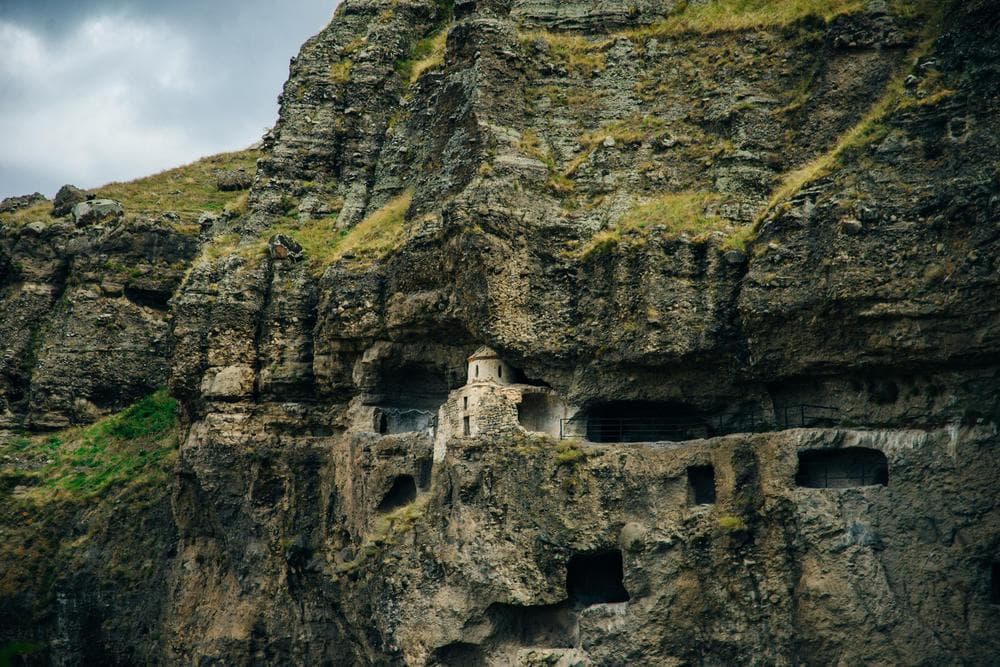
Carved into a volcanic cliff in southern Georgia, Vardzia is a 12th-century cave monastery with 13 levels, frescoed churches, and a story tied to Queen Tamar's golden age.
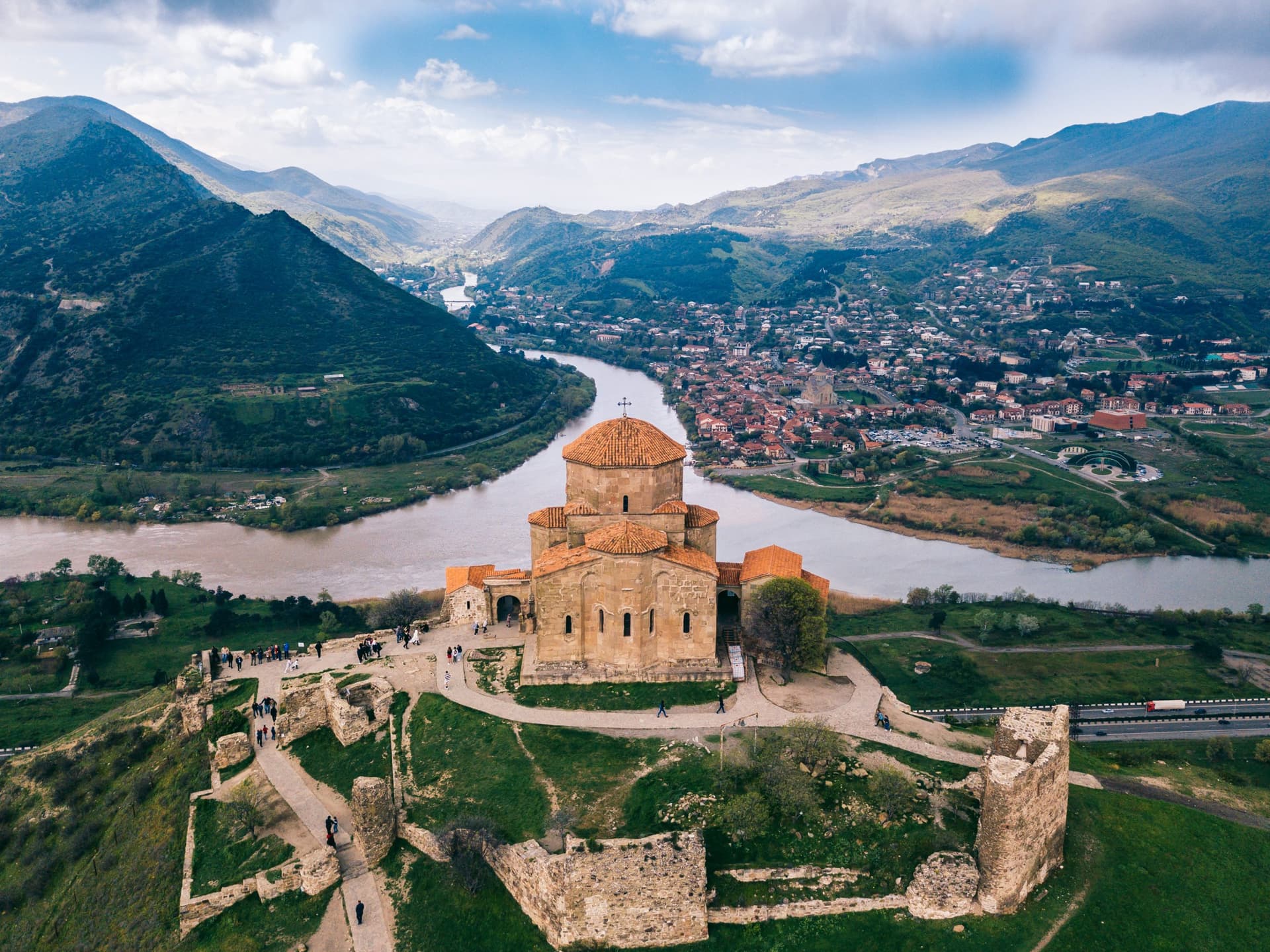
Once the capital of an ancient kingdom, Mtskheta is where Georgian history and Orthodox faith run deepest. Here's what to see, feel, and eat on a day trip from Tbilisi.
Feels 16°
Wind 8 km/h
5-day forecast
Sun
25°
15°
Mon
21°
12°
Tue
17°
14°
Wed
20°
14°
Thu
18°
12°