1 / 2
About this destination
Carved into a volcanic cliff in southern Georgia, Vardzia is a 12th-century cave monastery with 13 levels, frescoed churches, and a story tied to Queen Tamar's golden age.
Carved into a volcanic cliff in southern Georgia, Vardzia is a 12th-century cave monastery with 13 levels, frescoed churches, and a story tied to Queen Tamar's golden age.
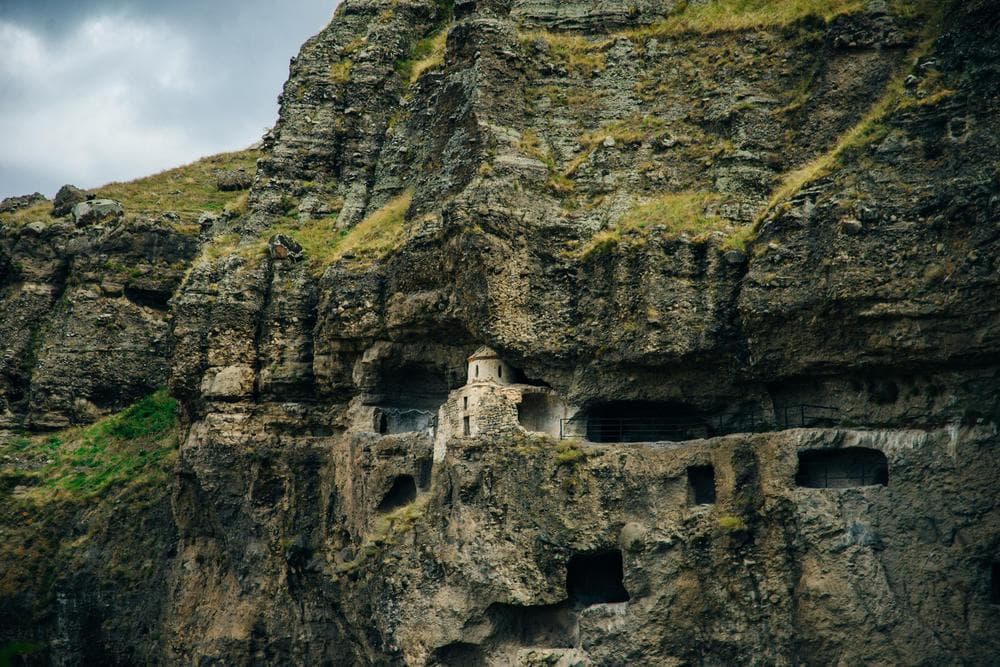
Stand at the base of Erusheti Mountain and look up — and what you see looks less like a monastery and more like an entire civilization tucked into the rock face.
Vardzia is one of those places that stops you mid-sentence. Carved into a cliff of dark volcanic tuff in Georgia's deep south, this cave monastery dates to the 12th century, when Georgia was at the height of its political and cultural power. The person behind it? Queen Tamar, the only woman to rule Georgia in her own right, and still the most celebrated figure in Georgian history.
At its peak, Vardzia wasn't just a monastery — it was a functioning city inside a mountain. Around 500 caves were cut into 13 levels of rock, housing up to 2,000 monks at a time. There were churches, libraries, storerooms, wine cellars, a water supply system fed by a natural spring, and even a pharmacy. The complex stretched roughly 500 metres along the cliff face.
Then, in 1283, a massive earthquake split the mountain. The outer layers of rock sheared away, exposing what had been a mostly hidden complex to the open air. What you see today — those honeycomb-like openings visible from the road — is actually the exposed interior of what was once a deeply buried structure.
Practical note: The site sits at around 1,300 metres above sea level in the Mtkvari River valley, near the town of Aspindza. From Tbilisi, it's roughly a 4-hour drive south through Borjomi and Akhaltsikhe. Many visitors combine it with a stop at Rabati Castle in Akhaltsikhe — a reasonable plan, though Vardzia deserves at least 2 hours on its own.
The Church of the Dormition is the heart of the complex, and it's worth slowing down here. The walls and ceiling are covered in frescoes painted in the late 12th century, in good enough condition that you can still make out individual faces and scenes. Look for the portrait of Queen Tamar on the north wall — she's depicted alongside her father, King Giorgi III, in the formal Byzantine style of the time. It's one of the few surviving contemporary portraits of her anywhere.
The church is still active. Monks returned to Vardzia in the 1990s and a small monastic community lives here today. You may hear chanting if you visit in the morning.
Visitors follow a marked path through the complex — you go up, through narrow corridors, past carved niches and sleeping chambers, and eventually out onto open-air terraces with views down the valley. The rock inside is cool even in summer, which feels like a gift when the southern Georgian sun is at its peak.
Some of the cave rooms still have carved shelves, hearths, and drainage channels — small details that make the monks who lived here feel less abstract and more real. One cellar even has ancient clay kvevri (wine vessels) still sunk into the floor.
Entrance costs around 7 GEL for adults. The site is open daily, and mornings on weekdays are the quietest time to visit.
The road from Akhaltsikhe to Vardzia runs alongside the Mtkvari River and passes through a few small villages where you can stop for khachapuri and coffee. The drive itself is worth the trip — steep canyon walls, walnut orchards, and the occasional shepherd blocking the road with a flock.
Wear shoes you can walk in — the path involves uneven rock surfaces and some low-clearance tunnels where you'll need to duck. A light jacket is useful inside the caves regardless of the season.
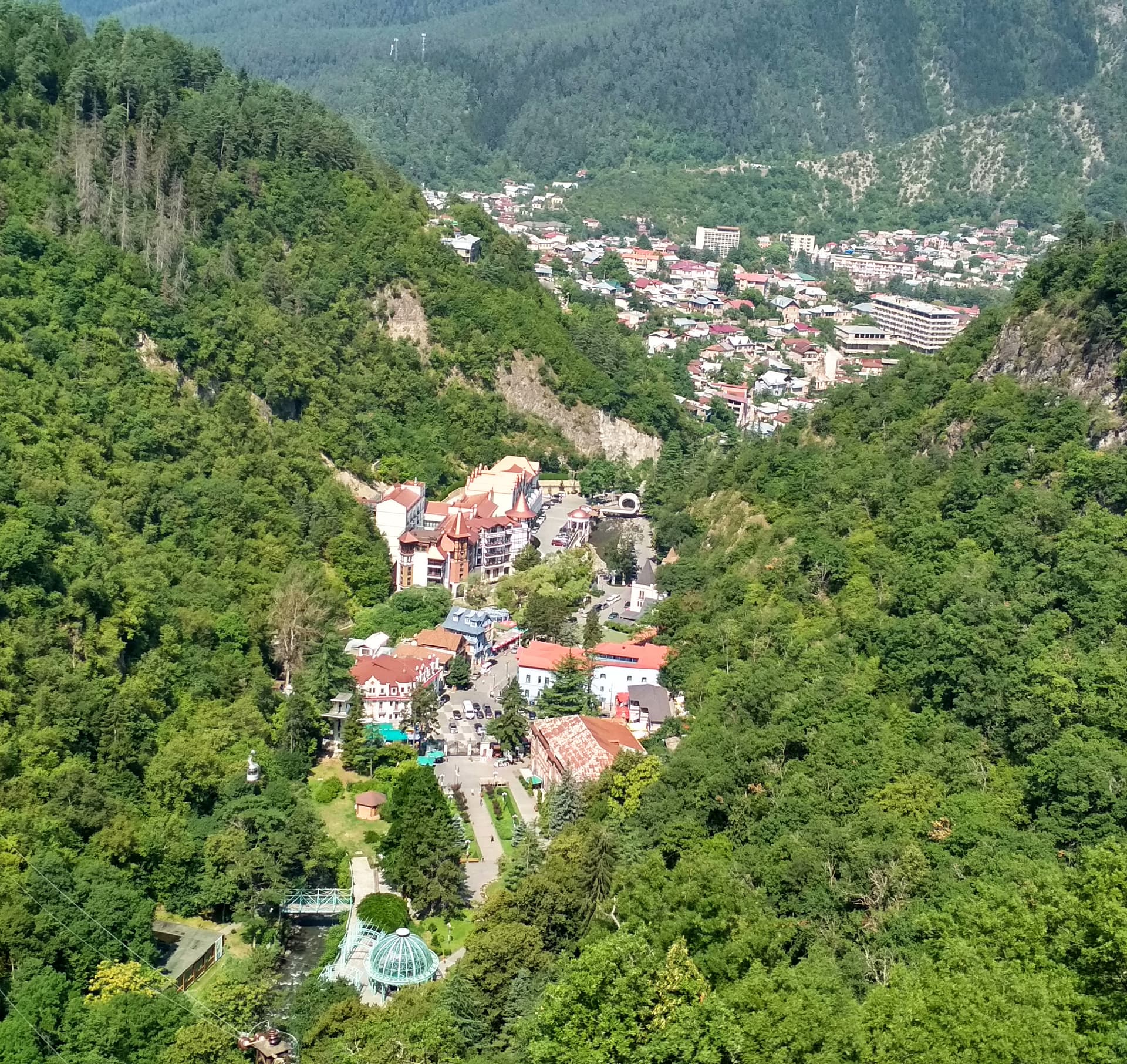
Mineral springs, old-growth forest, and a Romanov summer palace — Borjomi is a small Georgian town that quietly over-delivers. Here's what to see, drink, and do.
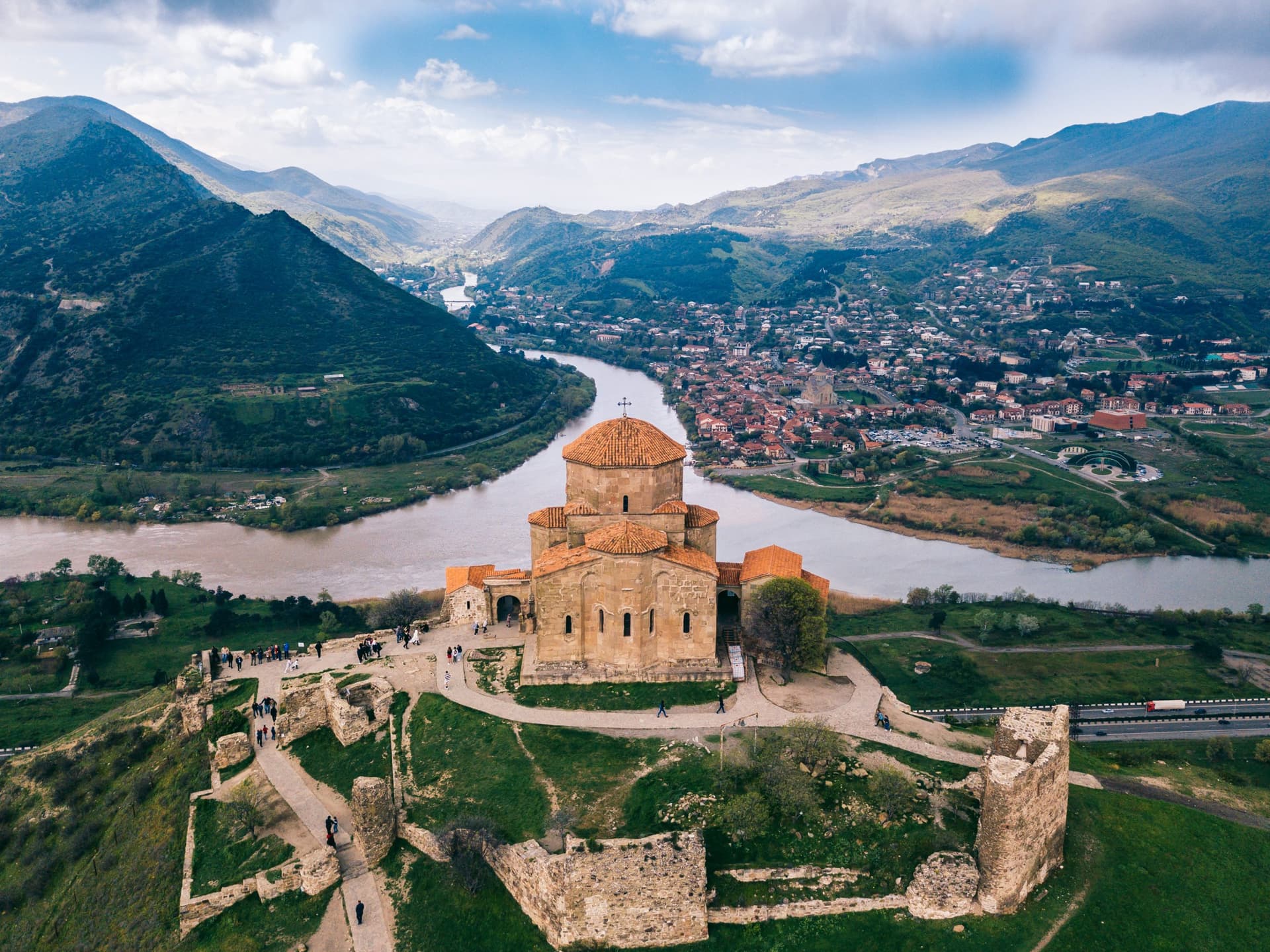
Once the capital of an ancient kingdom, Mtskheta is where Georgian history and Orthodox faith run deepest. Here's what to see, feel, and eat on a day trip from Tbilisi.
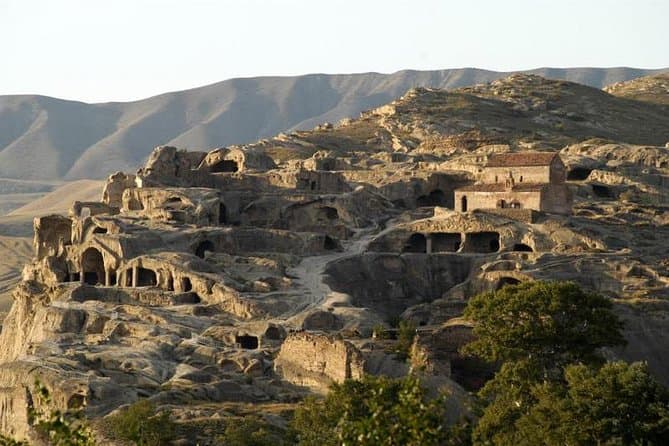
Carved into volcanic rock over 3,000 years ago, Uplistsikhe is one of Georgia's oldest urban sites — pagan temples, secret tunnels, and sweeping views of the Mtkvari River all in one place.
Feels 8°
Wind 6 km/h
5-day forecast
Sun
21°
10°
Mon
20°
10°
Tue
17°
10°
Wed
18°
8°
Thu
14°
8°