1 / 3
About this destination
Mineral springs, old-growth forest, and a Romanov summer palace — Borjomi is a small Georgian town that quietly over-delivers.
Here's what to see, drink, and do.
Mineral springs, old-growth forest, and a Romanov summer palace — Borjomi is a small Georgian town that quietly over-delivers.
Here's what to see, drink, and do.
You've almost certainly tasted Borjomi before — that slightly sulfurous, unmistakably mineral fizz in the green glass bottle. But the town that gives the water its name is something else entirely.
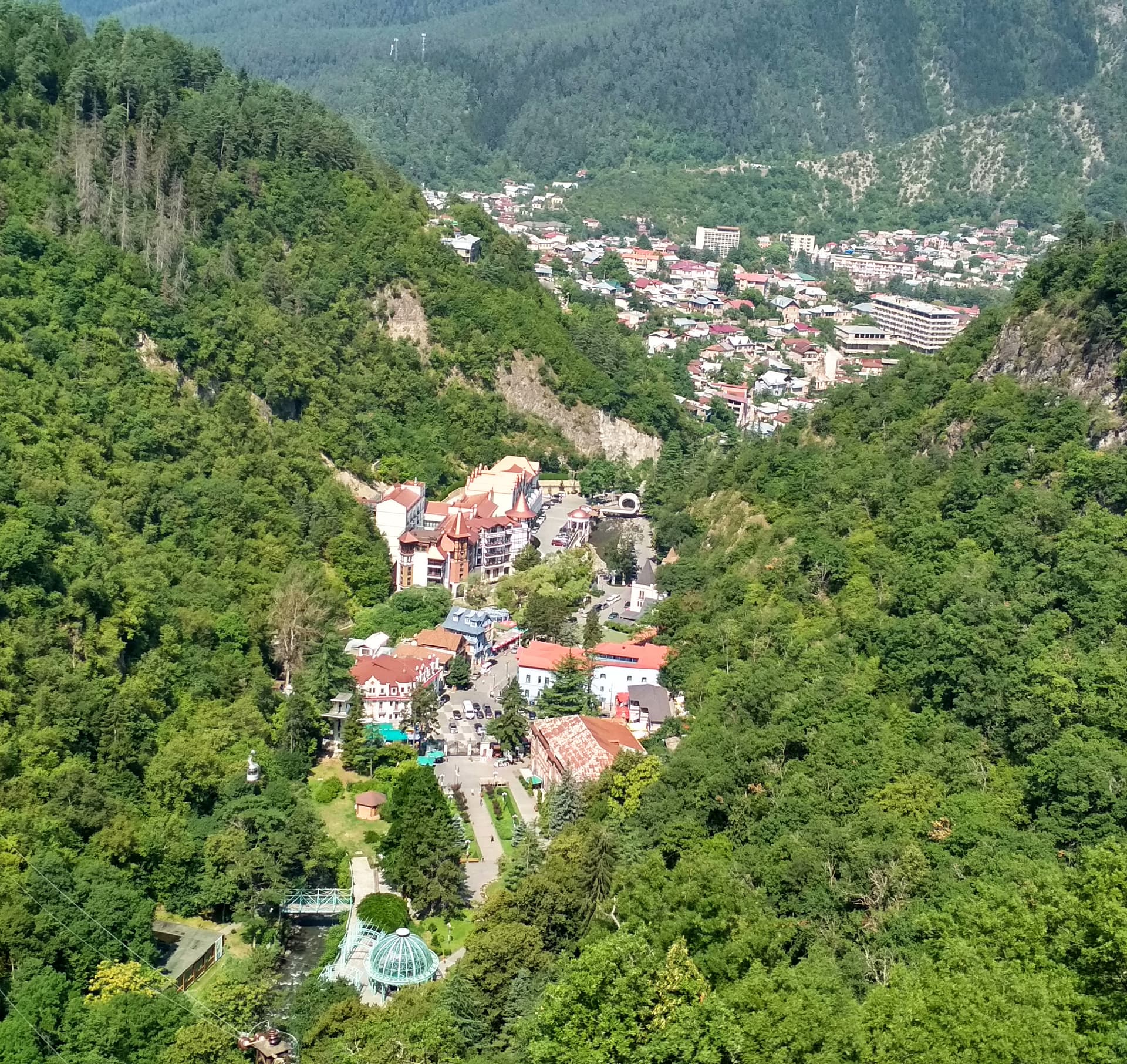
Borjomi sits in a deep river gorge in the Samtskhe-Javakheti region, about three hours southwest of Tbilisi by car or marshrutka. The town rose to prominence in the 19th century when Russian imperial officials discovered the springs and word got back to the Romanov family. They liked what they found enough to build a summer palace here — the Likani Palace — which still stands along the Mtkvari River, its pink facade slightly faded but perfectly photogenic.
The old Borjomi Central Park is where most visitors start, and for good reason. Walk in through the iron gates and within five minutes you hit the open-air mineral spring pavilion. You can fill a cup directly from the tap — for free. Fair warning: the water is warm, a little sulphurous, and quite unlike the bottled version you know. Some people love it immediately. Others need a second cup to come around. Either way, it's the kind of experience you'll be talking about over dinner.
Practical tip: Bring a reusable bottle. The spring is free and flows all day, and the water is best drunk fresh rather than carried around.
Borjomi-Kharagauli National Park begins almost at the edge of town, which is easy to forget until you look up and realize the hills are solid forest. It's one of the largest protected areas in Europe — around 85,000 hectares of Caucasian fir, beech, and oak — and it's genuinely wild. Brown bear, lynx, and chamois live here, though you're more likely to hear woodpeckers and see deer tracks than spot anything large.
The park has a well-organized trail network starting from the Visitor Center on the northern edge of town (look for the wooden signboards on Meskheti Street). Day hikes range from a gentle two-hour loop through the valley to full-day climbs with views across the Lesser Caucasus. If you're spending two nights in Borjomi, the Likani trail is worth every uphill step.
Practical tip: The Visitor Center sells detailed trail maps for about 5 GEL. Download the GPX tracks too — mobile signal drops quickly once you're in the trees.
Georgia has a soft spot for Soviet-era infrastructure, and the narrow-gauge railway between Borjomi and Bakuriani is one of the more charming examples. The train runs roughly 37 kilometers through the Borjomi Gorge, crosses a number of old bridges, and climbs slowly up to the ski town of Bakuriani at 1,700 meters. It's not fast — the journey takes about two and a half hours — but speed is not the point. The point is the gorge light in the afternoon and the old wooden stations that look unchanged since 1902.
Trains depart from Borjomi-Sakharkhelo station a couple of times daily. A one-way ticket costs around 1 GEL, which might be the best value in the entire Caucasus.
Borjomi's restaurant scene is modest but honest. Look for guesthouses along Rustaveli Street — most of them serve home-cooked meals, and a full dinner of lobiani (bean-stuffed bread), grilled trout from the Mtkvari, and a carafe of house Samtskhe wine rarely costs more than 25–30 GEL per person.
For accommodation, mid-range hotels cluster near the park entrance and along the river. Expect to pay 80–150 GEL per night for a clean double room with breakfast. Book ahead on weekends in July and August — Tbilisi families descend in force.
Late spring (May–June) and early autumn (September–October) are the sweet spots. The gorge air is cool, the trails aren't crowded, and the forest colors in October are worth the trip on their own. Winter works too if you're combining Borjomi with a ski weekend in Bakuriani — the two towns are easy to pair.
Feels 13°
Wind 3 km/h
5-day forecast
Sun
23°
12°
Mon
19°
11°
Tue
16°
12°
Wed
19°
12°
Thu
15°
9°
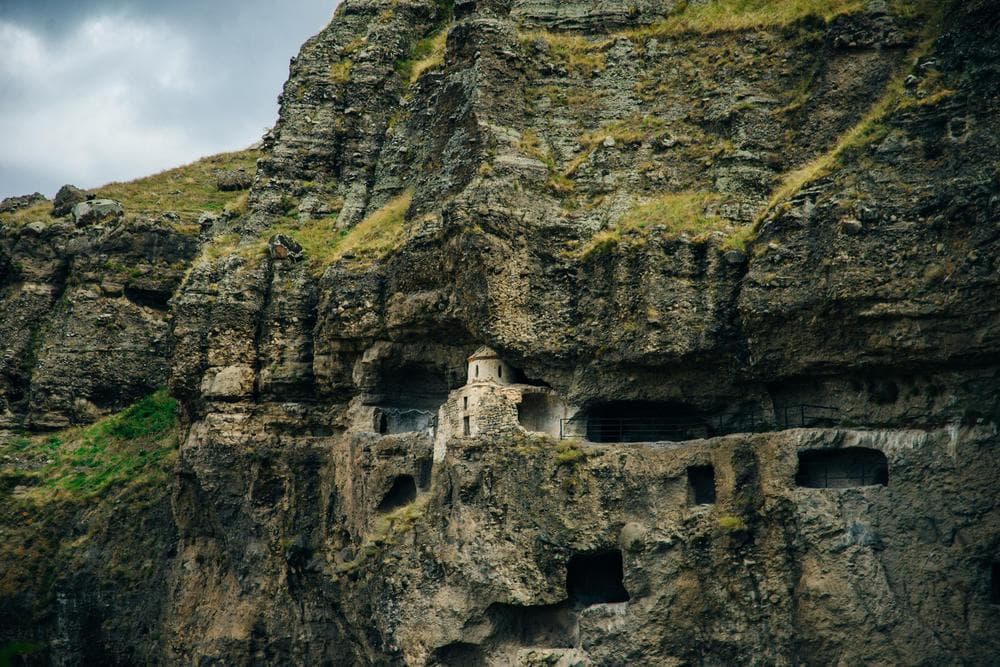
Carved into a volcanic cliff in southern Georgia, Vardzia is a 12th-century cave monastery with 13 levels, frescoed churches, and a story tied to Queen Tamar's golden age.
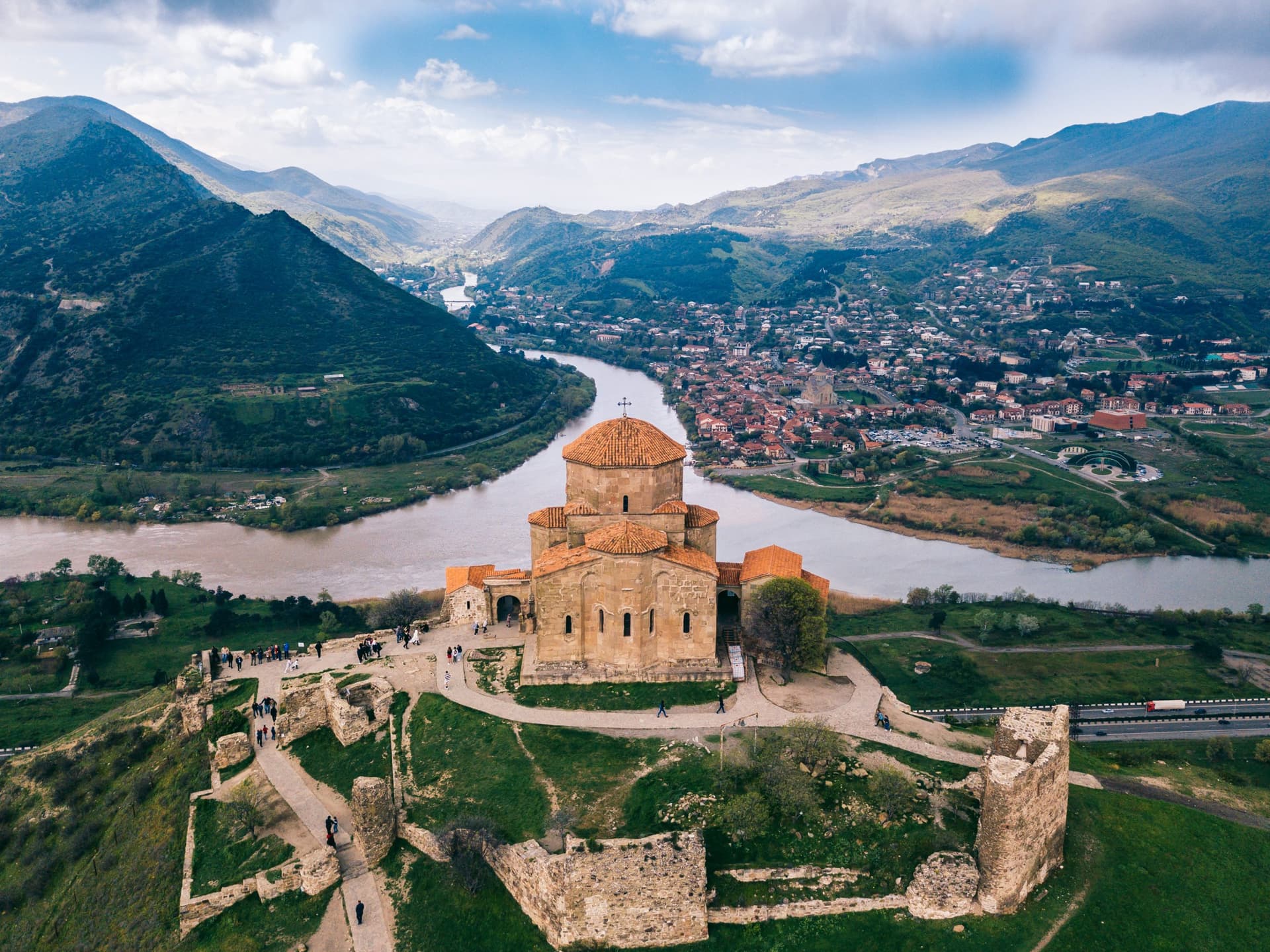
Once the capital of an ancient kingdom, Mtskheta is where Georgian history and Orthodox faith run deepest. Here's what to see, feel, and eat on a day trip from Tbilisi.
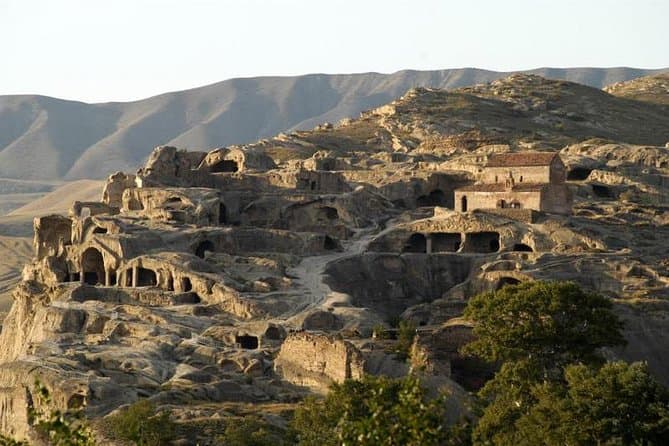
Carved into volcanic rock over 3,000 years ago, Uplistsikhe is one of Georgia's oldest urban sites — pagan temples, secret tunnels, and sweeping views of the Mtkvari River all in one place.