1 / 2
About this destination
Sulfur baths, crumbling balconies, wine poured from clay jars — Tbilisi is a city that refuses to be one thing.
Here's how to read it like a local.
Sulfur baths, crumbling balconies, wine poured from clay jars — Tbilisi is a city that refuses to be one thing.
Here's how to read it like a local.
Tbilisi has a smell before it has a view. Step out near Abanotubani — the sulfur bath district — and the warm, eggy whiff of mineral water hits you before you even spot the domed bathhouses rising from the earth like giant stone mushrooms. That's a good starting point for understanding this city: it gets under your skin quietly, almost accidentally.
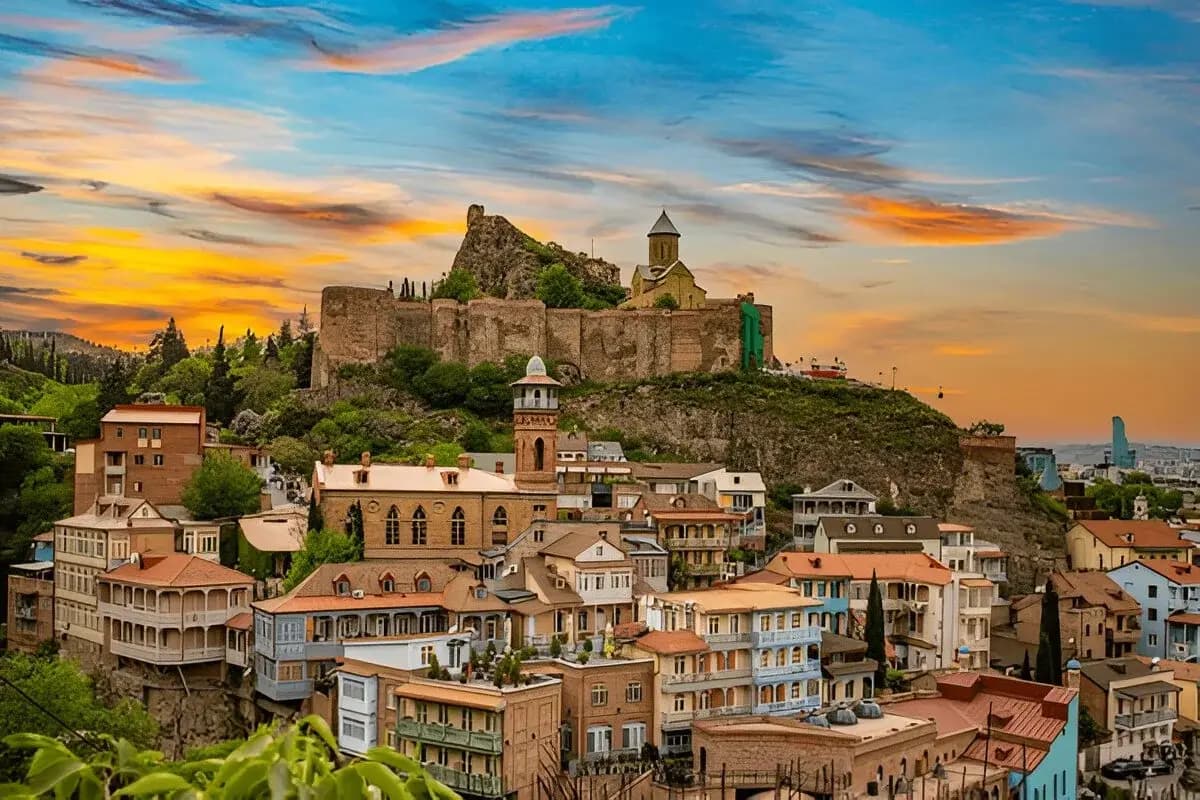
Abanotubani sits at the southern edge of the Old Town (Dzveli Tbilisi), and if you walk uphill from here for about 15 minutes, you'll reach Narikala Fortress. The views from the top — the Mtkvari River below, the jumble of rust-red rooftops, the Metekhi Church jutting out on its cliff — are the kind that make you sit down and stare longer than you planned.
Back at street level, the Old Town rewards slow walking. Look up: Tbilisi's carved wooden balconies, some sagging beautifully with age, are the city's most distinctive feature. Many are genuinely old; some are freshly restored; a few are mid-collapse. It gives the whole neighbourhood an honest, lived-in feel that no renovation project has managed to sand away.
Practical tip: The sulfur baths in Abanotubani are a legitimate local ritual, not a tourist gimmick. A private room at Chreli-Abano or Royal Bath costs around 20–30 GEL per person per hour. Book ahead on weekends.
Head north from the Old Town and you hit Rustaveli Avenue, Tbilisi's main boulevard. The Georgian National Museum is worth two hours of your time — the ground floor gold collection alone, with its Colchian treasures dating back 3,000 years, changes the way you think about what was happening in the Caucasus while Rome was still a village.
But the real texture of the city lives in the streets between Rustaveli and the river: Vera, Vake, Marjanishvili. These are residential neighbourhoods where you'll find courtyard wine bars, secondhand bookshops, and bakeries selling fresh shotis puri (the canoe-shaped Georgian bread) for about 1 GEL a loaf. The bread comes out of a tone oven — a clay pit in the ground — and it's worth watching the baker slap the dough onto the oven walls if you catch it in the morning.
You can eat very well in Tbilisi for very little. A full meal of khinkali (soup dumplings — hold from the top, bite a small hole, drink the broth first), lobiani (bean-stuffed bread), and a carafe of house wine will set you back 25–35 GEL at any honest local spot. Café Littera, set in the garden of the Writers' House on Machabeli Street, is a step up in price but worth it for a special dinner — the kitchen takes Georgian ingredients seriously without turning them into something unrecognisable.
For wine, remember that Georgia is where wine was invented — literally: the oldest evidence of winemaking on earth, around 8,000 years old, was found here. The amber-coloured qvevri wines (made in clay pots buried underground) taste unlike anything you'll find in a French bottle. Try a glass at any of the small wine bars along Erekle II Street in the Old Town.
The Bridge of Peace — a glass-and-steel pedestrian footbridge that looks like it was beamed in from a different decade — crosses the Mtkvari and connects the Old Town to Rike Park. It's jarring next to the medieval cityscape and that's entirely the point. Tbilisi has never been precious about layering new things onto old ones.
Rike Park itself is pleasant for an evening walk, and the cable car from the park up to Narikala offers a different angle on the city, day or night (3 GEL each way).
What makes Tbilisi worth more than a weekend is harder to name. It's the neighbour who brings you churchkhela (walnut-and-grape candy) without being asked. The jazz leaking out of a basement bar at midnight. The way a city of 1.2 million people somehow feels like a large village. Come with time to wander and you'll leave with plans to return.
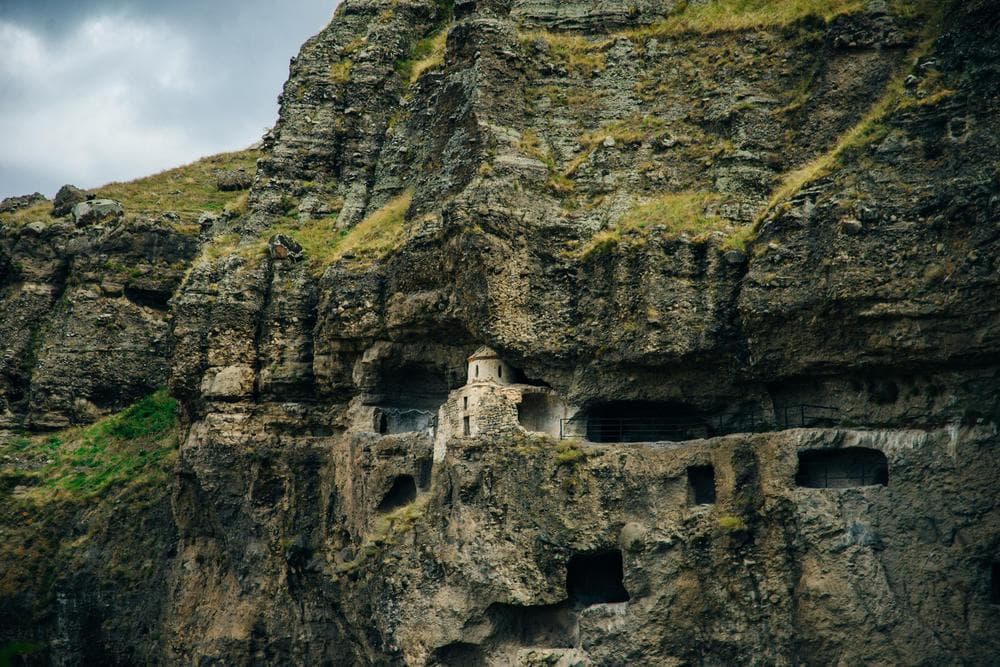
Carved into a volcanic cliff in southern Georgia, Vardzia is a 12th-century cave monastery with 13 levels, frescoed churches, and a story tied to Queen Tamar's golden age.
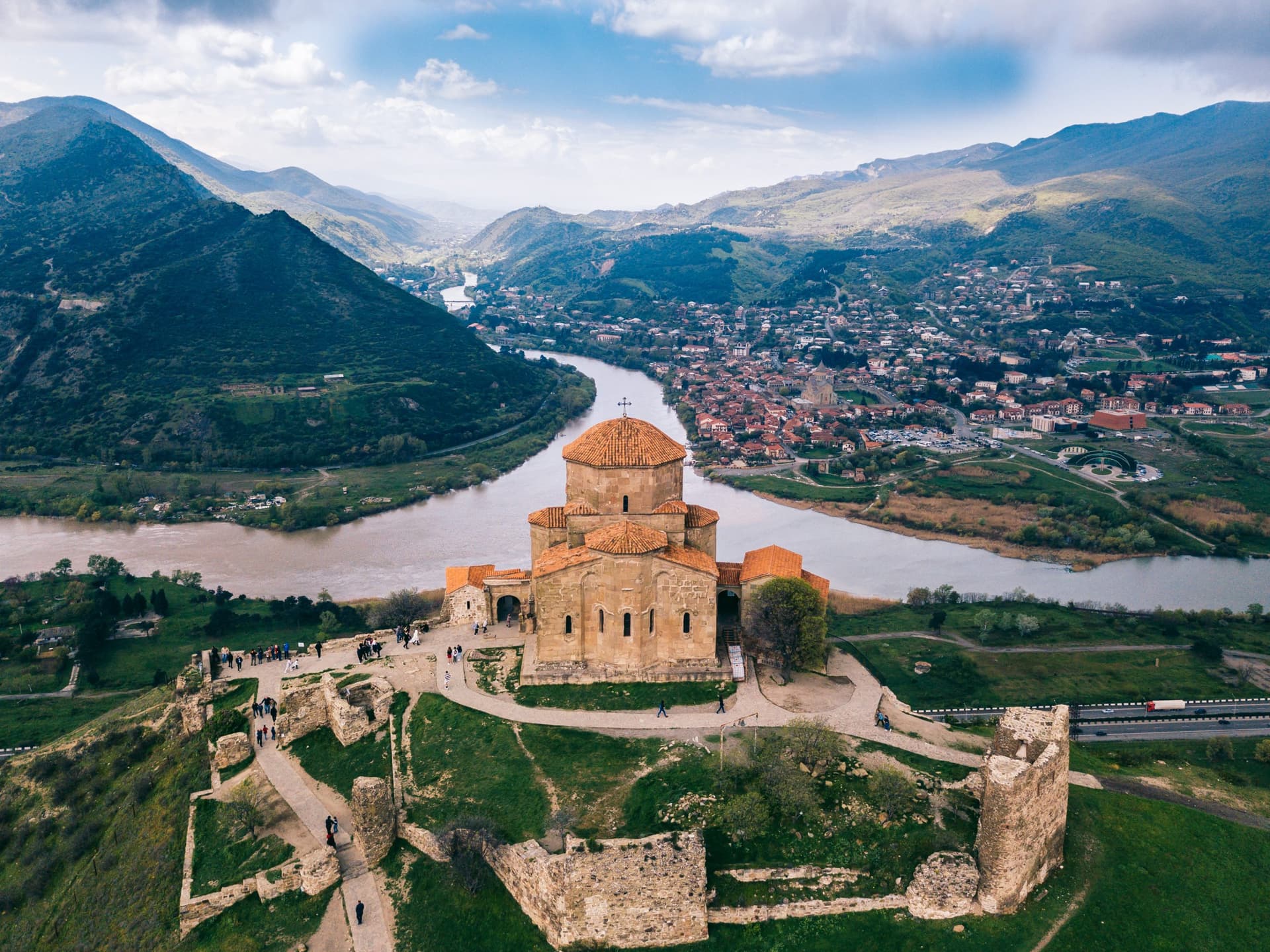
Once the capital of an ancient kingdom, Mtskheta is where Georgian history and Orthodox faith run deepest. Here's what to see, feel, and eat on a day trip from Tbilisi.
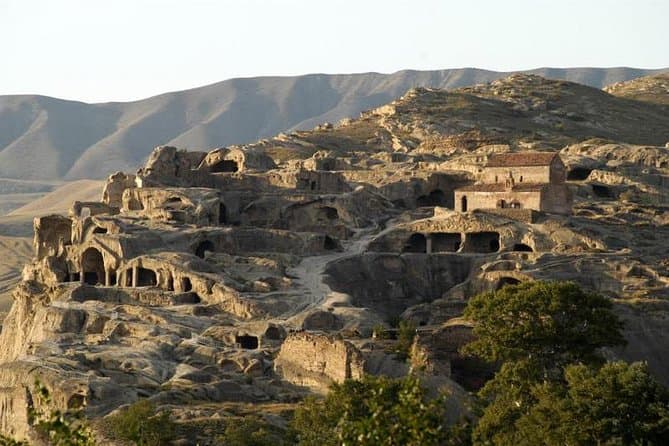
Carved into volcanic rock over 3,000 years ago, Uplistsikhe is one of Georgia's oldest urban sites — pagan temples, secret tunnels, and sweeping views of the Mtkvari River all in one place.
Feels 20°
Wind 2 km/h
5-day forecast
Sun
27°
15°
Mon
27°
17°
Tue
17°
16°
Wed
21°
15°
Thu
21°
14°
Best time to visit
Apr–May, Sep–Oct
Spring (April–May) and autumn (September–October) are kindest. July and August are hot.