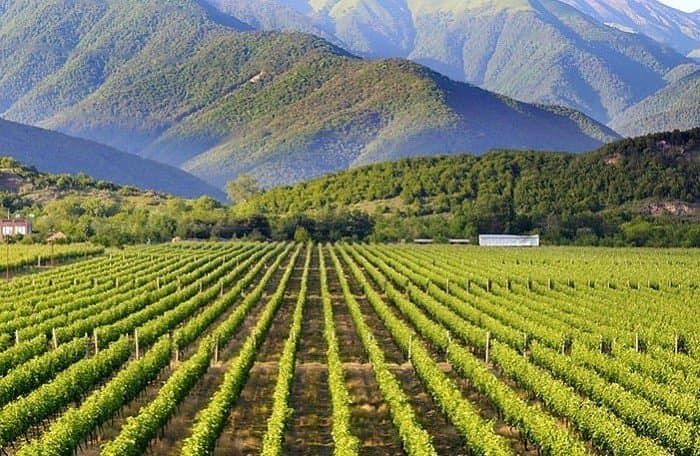
Qvevri wines, ancient monasteries, hilltop Sighnaghi, and family feasts that go until midnight — Kakheti is the heartland of Georgia, and it earns every bit of that reputation.
Georgia invented wine. Not metaphorically — archaeologists have found grape seeds and clay vessels here dating back 8,000 years, making this the oldest confirmed winemaking culture on earth. And the region where that tradition is most alive today is Kakheti, a long, sun-drenched valley in the country's east, framed by the Greater Caucasus to the north and the Gombori ridge to the south.
About three hours from Tbilisi by car, Kakheti feels like a different pace of life entirely.
Kakheti produces roughly 70% of all Georgian wine, but numbers don't capture what makes it special. The method does. Many local winemakers still ferment in qvevri — large clay amphorae buried in the ground — the same way their great-grandparents did. Skin-contact "amber" wines aged in qvevri have a tannin structure and earthy depth you won't find in a French or Italian bottle. They can be polarizing at first. Give them a second glass.
The main grape varieties to know: Rkatsiteli (white, dry, slightly austere) and Saperavi (red, deeply pigmented, bold enough to stain your lips). You'll find both everywhere, from polished tasting rooms in Telavi — the regional capital — to a farmer's basement where the wine comes out of a plastic pitcher and costs nothing, because you're a guest.
Tip: The town of Kvareli sits right at the foothills with a cluster of excellent small wineries. Kindzmarauli Corporation and Pheasant's Tears (in nearby Sighnaghi) both offer tastings — budget around 20–40 GEL per person.
Sighnaghi gets called "the City of Love" because the registry office here is open 24 hours and couples come to marry on a whim. That's a fun footnote, but the real reason to go is the view. The town sits on a ridge above the Alazani Valley, and on a clear day you can see the snow-capped peaks of the Caucasus rising beyond the flat green plain. The 18th-century walls and towers still circle the old town, and the cobblestone streets are genuinely pleasant to wander.
Stay overnight if you can. Sighnaghi empties out by late afternoon when the day-trippers leave, and the town at dusk — with the valley turning gold below — is something else entirely.
Alaverdi Cathedral, rising from the valley floor near Akhmeta, is one of the tallest medieval churches in the Caucasus. It was built in the 11th century and has been active as a monastery ever since. The monks make wine on the premises — you can buy a bottle at the gate for around 15–25 GEL. Standing inside the cathedral, which is dim and cool even in August, you get a sense of continuity that no museum can fake.
Ikalto Monastery, closer to Telavi, is smaller and quieter. It was home to one of the earliest academies in the Caucasus, founded in the 6th century, and the ruins of the old school buildings are still there beside the church. Worth an hour of your time.
Kakhetian food leans heartier than Tbilisi's restaurant scene. Look for mtsvadi (pork or beef skewers grilled over vine cuttings — the smoke is part of the flavor), badrijani nigvzit (fried aubergine rolled around walnut paste and pomegranate seeds), and churchkhela, the walnut-and-grape-juice candy that hangs in clusters at every roadside stall. It looks like a candle, tastes like concentrated harvest.
If a local family invites you to sit down for a supra — a traditional feast with a designated toastmaster called a tamada — say yes without thinking twice. The meal will last hours, the toasts will get philosophical, and you'll leave knowing more about Georgian history than any guidebook could teach you.
Most visitors base themselves in Telavi or Sighnaghi. Marshrutkas (shared minibuses) run from Tbilisi's Samgori and Isani stations for 8–12 GEL, but they don't reach the villages. Renting a car gives you real freedom — expect to pay 80–120 GEL/day for a basic hatchback. Alternatively, many guesthouses in the region can arrange a local driver for a day trip at a negotiated rate.
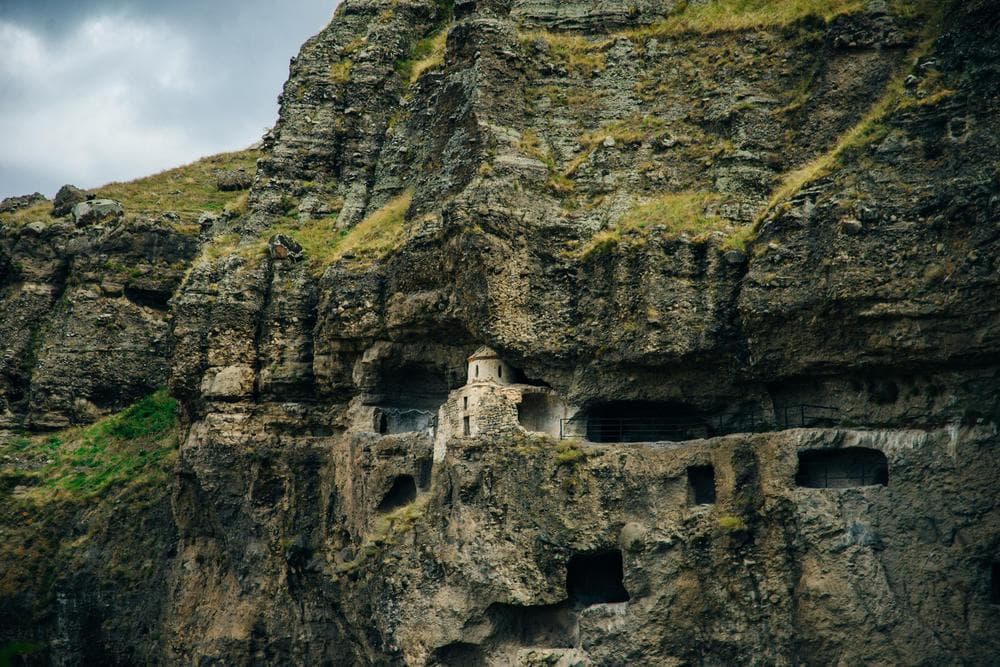
Carved into a volcanic cliff in southern Georgia, Vardzia is a 12th-century cave monastery with 13 levels, frescoed churches, and a story tied to Queen Tamar's golden age.
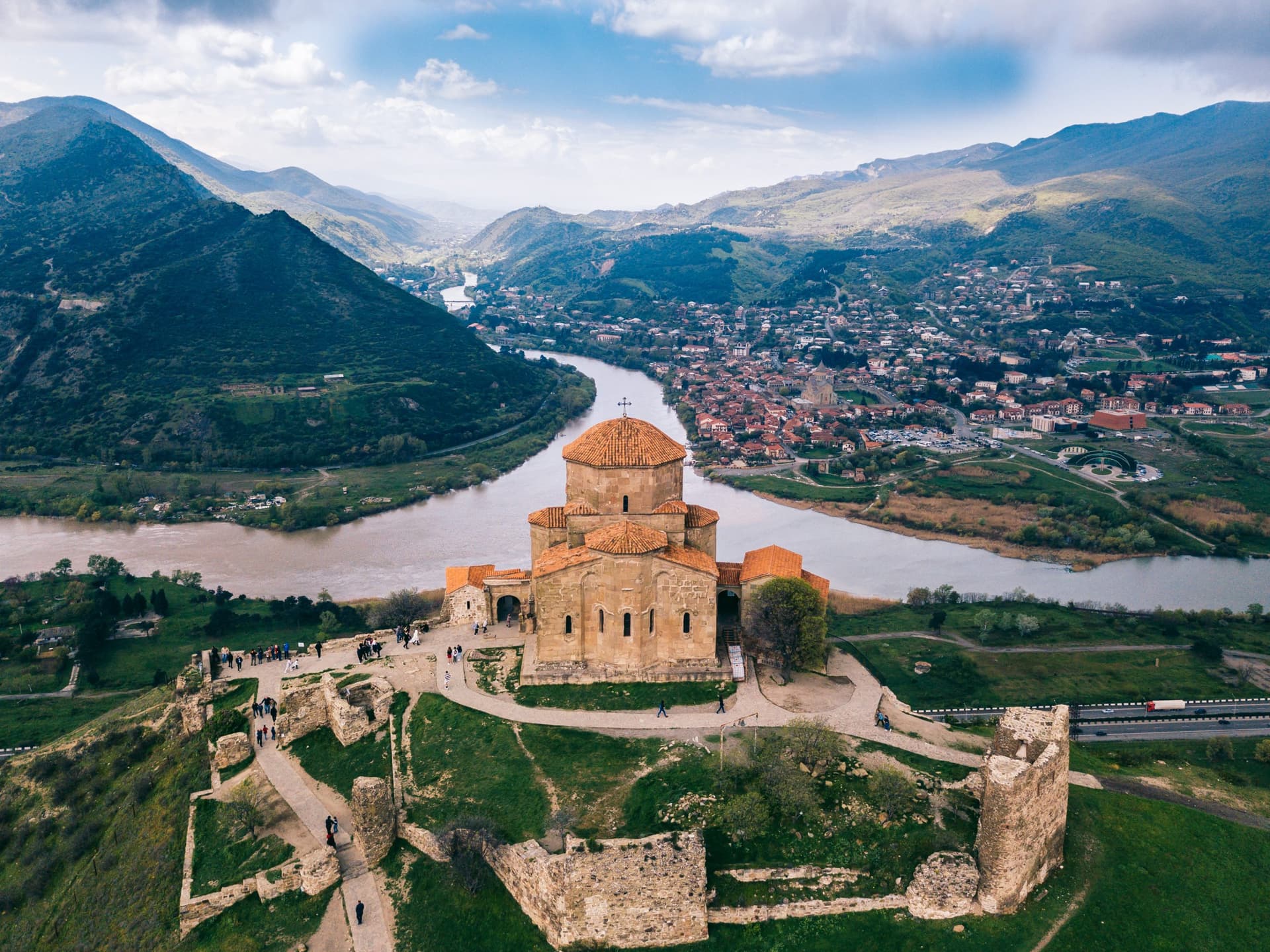
Once the capital of an ancient kingdom, Mtskheta is where Georgian history and Orthodox faith run deepest. Here's what to see, feel, and eat on a day trip from Tbilisi.
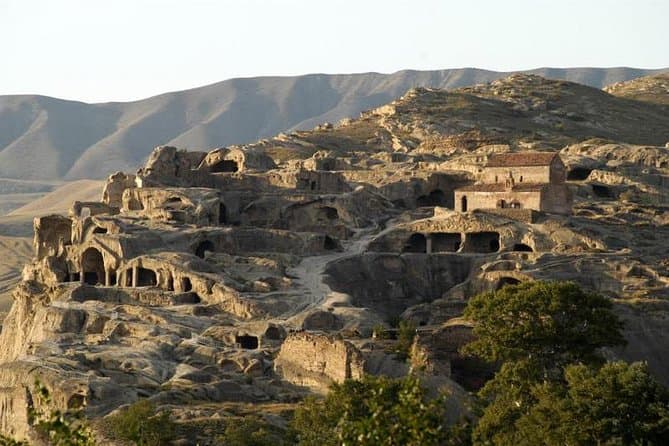
Carved into volcanic rock over 3,000 years ago, Uplistsikhe is one of Georgia's oldest urban sites — pagan temples, secret tunnels, and sweeping views of the Mtkvari River all in one place.
Feels 21°
Wind 1 km/h
5-day forecast
Sat
24°
17°
Sun
25°
16°
Mon
25°
16°
Tue
16°
15°
Wed
19°
14°
Best time to visit
May–Jun, Sep–Oct
Late September–October is Rtveli (grape harvest) — book accommodation early.