1 / 4
About this destination
Stepantsminda sits at the foot of 5,047m Mount Kazbek, with a medieval church on the ridge above and some of Georgia's best hiking just outside your door.
Stepantsminda sits at the foot of 5,047m Mount Kazbek, with a medieval church on the ridge above and some of Georgia's best hiking just outside your door.
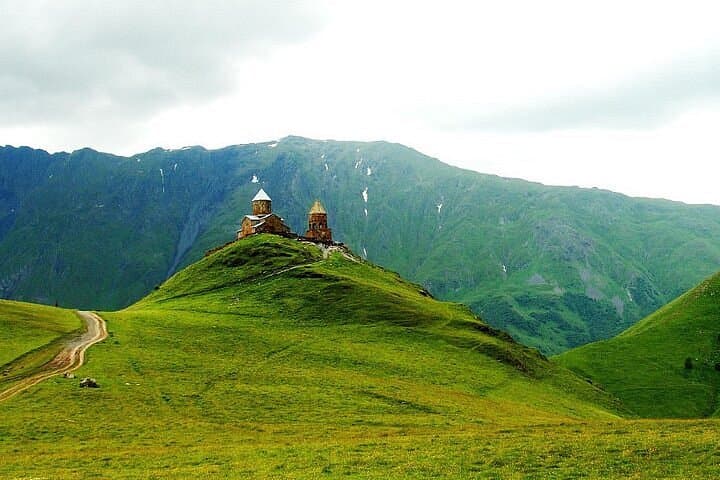
The first time you see Gergeti Trinity Church — a medieval stone silhouette sitting on a rocky spur at 2,170 meters, with the snow cone of Mount Kazbek floating behind it — you'll probably stop mid-sentence and just stare. That image is plastered on every Georgia travel board online, yet nothing prepares you for the real thing.
Kazbegi (officially renamed Stepantsminda, though locals use both names interchangeably) sits about 150 km north of Tbilisi along the Georgian Military Highway — a road that has connected Georgia to Russia across the Caucasus since the 18th century. The drive takes roughly 2.5 hours, and for the last third of it you're threading through narrow gorges, past the Soviet-era Jinvali reservoir, and under cliff faces that seem to lean over the road. Marshrutkas (shared minibuses) leave from Tbilisi's Didube station for around 10–15 GEL. If you rent a car or book a driver, you can stop at the Ananuri fortress complex along the way — absolutely worth the 20 minutes.
Gergeti Trinity Church dates to the 14th century, and the Georgians have been hauling sacred relics up here for safekeeping during invasions ever since. The hike from the village takes 1.5–2 hours, climbing roughly 600 meters through open meadow and then steeper switchbacks. It's hard enough to make you earn the view, not hard enough to require any special gear in summer. Wear proper shoes — the trail gets muddy fast after rain — and bring water, because there's nothing to buy at the top.
If you'd rather not hike, local drivers at the town square offer 4x4 rides up for around 20–30 GEL per car. The road is rough; the shortcut is real.
The town itself is small — a single main street, a handful of guesthouses, a few restaurants serving khinkali (those soup-filled dumplings you eat with your hands) and kubdari, the meaty Svan-style stuffed bread that becomes your default lunch by day two. Rooms in family guesthouses run 60–120 GEL per night and usually include breakfast. Book ahead for summer weekends; the place fills up fast.
The pace here is slow in the best way. Cows wander across the road in the morning. The air smells of pine and cold even in July. By evening, when the day-trippers from Tbilisi clear out, the town exhales and the mountains turn pink.
Most people see the church and leave. That's a shame, because Kazbegi has some of the most accessible alpine terrain in the whole Caucasus. The trail to Gveleti waterfall (about 5 km round trip) is easy and spectacular. Juta valley, 30 minutes by car from Stepantsminda, opens up into high-alpine meadows ringed by glaciers — it's a full day out if you push to the Chaukhi Pass. Serious climbers come specifically for Mount Kazbek itself (5,047m), though that requires acclimatization, a guide, and proper equipment.
Horses are another option: guesthouses can arrange guided rides into the surrounding valleys for 80–150 GEL for a half day.
Weather changes fast at this altitude. A sunny morning can turn into a full cloud-and-rain situation by 2pm. Pack a waterproof layer regardless of the forecast. The church is an active place of worship — dress modestly, and if there's a service happening, hang back and give it space. ATMs exist in town but are not always stocked; bring cash from Tbilisi.
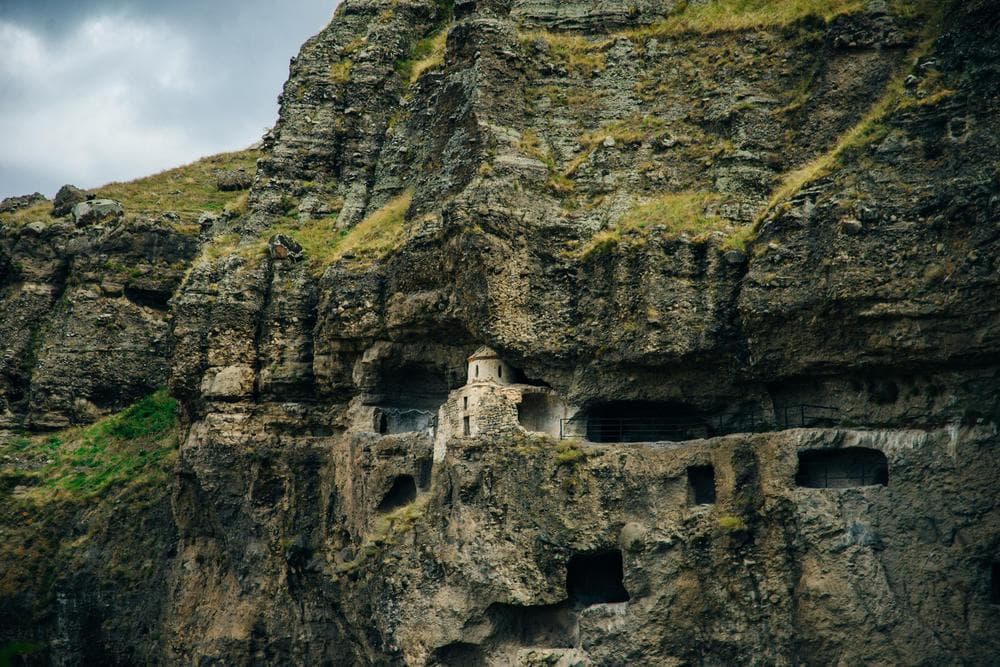
Carved into a volcanic cliff in southern Georgia, Vardzia is a 12th-century cave monastery with 13 levels, frescoed churches, and a story tied to Queen Tamar's golden age.
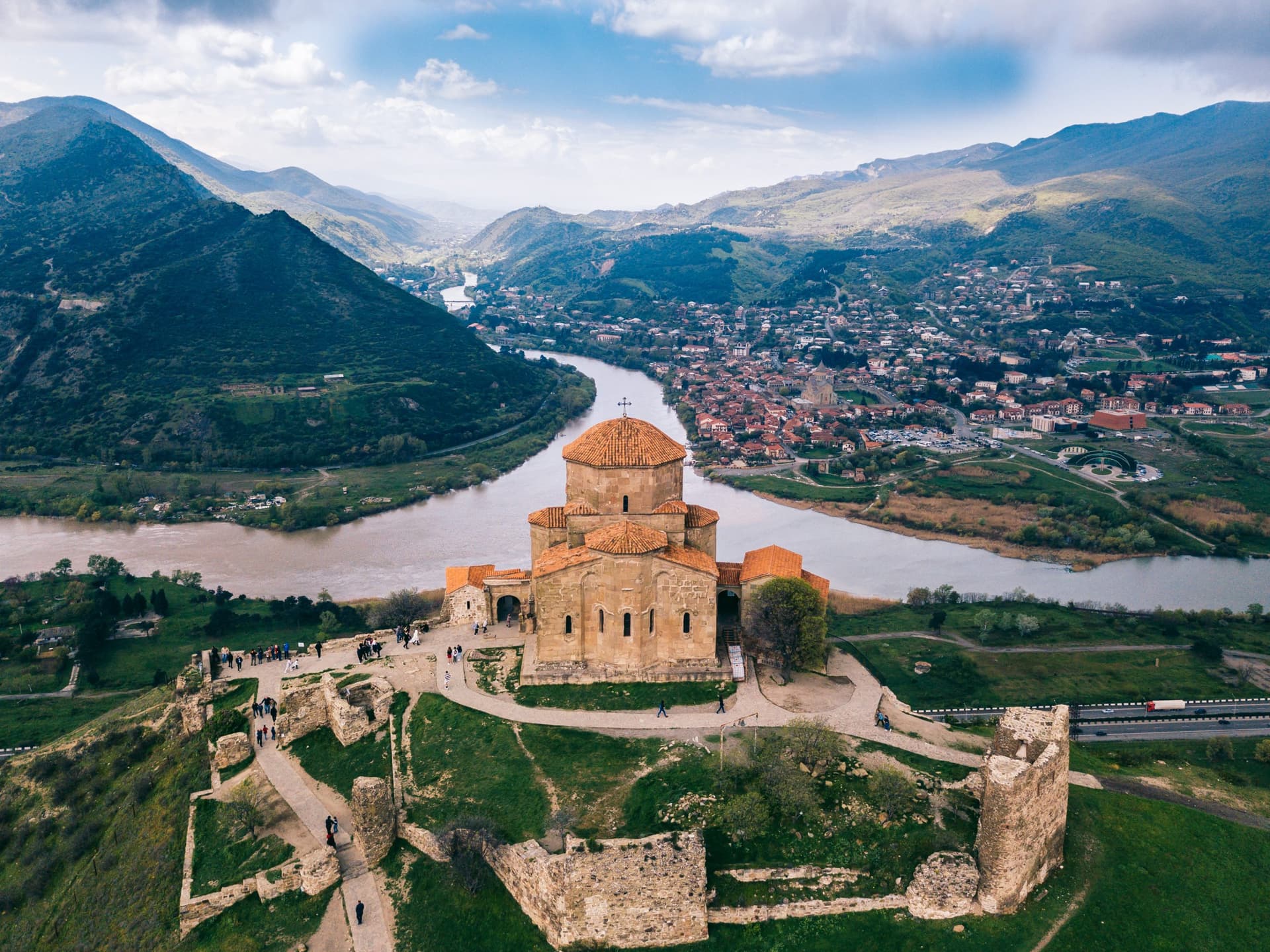
Once the capital of an ancient kingdom, Mtskheta is where Georgian history and Orthodox faith run deepest. Here's what to see, feel, and eat on a day trip from Tbilisi.
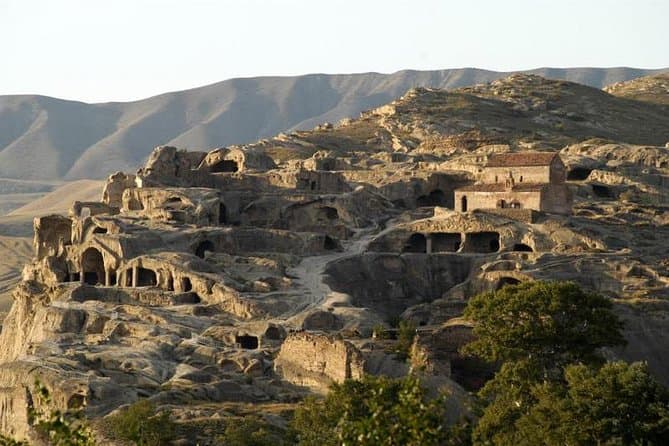
Carved into volcanic rock over 3,000 years ago, Uplistsikhe is one of Georgia's oldest urban sites — pagan temples, secret tunnels, and sweeping views of the Mtkvari River all in one place.
Feels 14°
Wind 15 km/h
5-day forecast
Sun
17°
12°
Mon
17°
10°
Tue
13°
11°
Wed
14°
10°
Thu
13°
6°
Best time to visit
May–Sep
Gergeti Trinity is most photogenic in late spring and early autumn. Winter closes the upper trails.