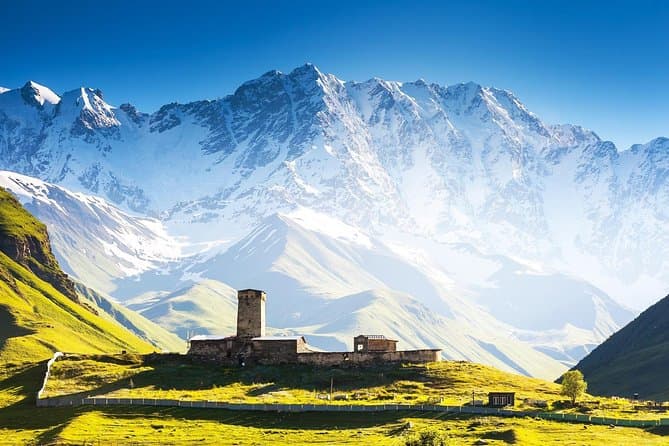
Stone towers, glacier trails, and kubdari fresh from the oven — Svaneti sits at 1,500 m and feels like nowhere else on earth.
Here's what to expect.
The towers hit you before anything else. You're still on the marshrutka from Zugdidi, grinding up a road that keeps threatening to become a cliff, and suddenly the silhouettes appear above the treeline — dozens of them, square and ancient, rising out of Mestia like stone fingers pointing at the sky.
Svaneti sits in the northwest corner of Georgia, tucked between the Greater Caucasus range and a handful of glaciers that feed rivers cold enough to take your breath away. Most visitors arrive in Mestia (1,500 m elevation), the region's main town and the obvious base for exploring. The drive from Kutaisi takes around four to five hours; there's also a small airport with flights from Tbilisi that run when weather permits — and in Svaneti, weather has opinions.
The Svan towers (called koshkebi locally) aren't decorative. Families built them between the 9th and 13th centuries as refuges from raids and blood feuds — a practice that remained part of Svan life well into the 20th century. Some towers are four storeys tall with walls nearly two metres thick. In the village of Ushguli, about 45 km southeast of Mestia, you'll find the highest continuously inhabited settlement in Europe (around 2,200 m) and a cluster of towers so dense it looks like a film set. It isn't.
Ushguli is a half-day trip from Mestia by 4WD (expect to pay around 150–200 GEL for a shared jeep). The road is unpaved and spectacular. Don't rush it.
The most popular route is the Mestia–Ushguli trek: four days, roughly 55 km, through high passes and villages where guesthouses charge 60–80 GEL per night including dinner. You don't need a guide for this trail — it's well-marked and well-traveled from June through September. Bring layers regardless of the month; afternoons can be warm and mornings will remind you that you're in the mountains.
For something more demanding, the trek to Chalaadi Glacier starts practically from Mestia's edge. It's a three-hour return walk through pine forest to a glacier snout that feels genuinely wild, and it costs nothing but shoe leather.
Forget the khachapuri you had in Tbilisi. In Svaneti the local bread is kubdari — a thick, hand-sized round stuffed with spiced meat and onions, baked in a wood-fired oven. Order one for 5–8 GEL at any guesthouse or the small canteens around Mestia's central square. Eat it hot.
Svan salt (svanuri marili) is worth bringing home: a blend of dried garlic, coriander, blue fenugreek, and chilies that Svans put on everything. Pick it up at the market stalls near the museum for around 5 GEL per bag.
Mestia itself is small and gets busy in July and August. The infrastructure has improved a lot in the last decade — there are decent guesthouses, a handful of restaurants, and reliable (if slow) mobile internet. But Svaneti still rewards patience. The mountains will cloud over without warning. A planned day hike becomes a reading afternoon. That's not a problem; that's the deal.
The Svaneti History and Ethnography Museum in Mestia has a genuinely impressive collection of medieval icons, jewelry, and manuscripts that were hidden in these towers for centuries. Admission is 15 GEL. Go before the trekking, not after — it gives the landscape a different weight once you understand what people were protecting here.
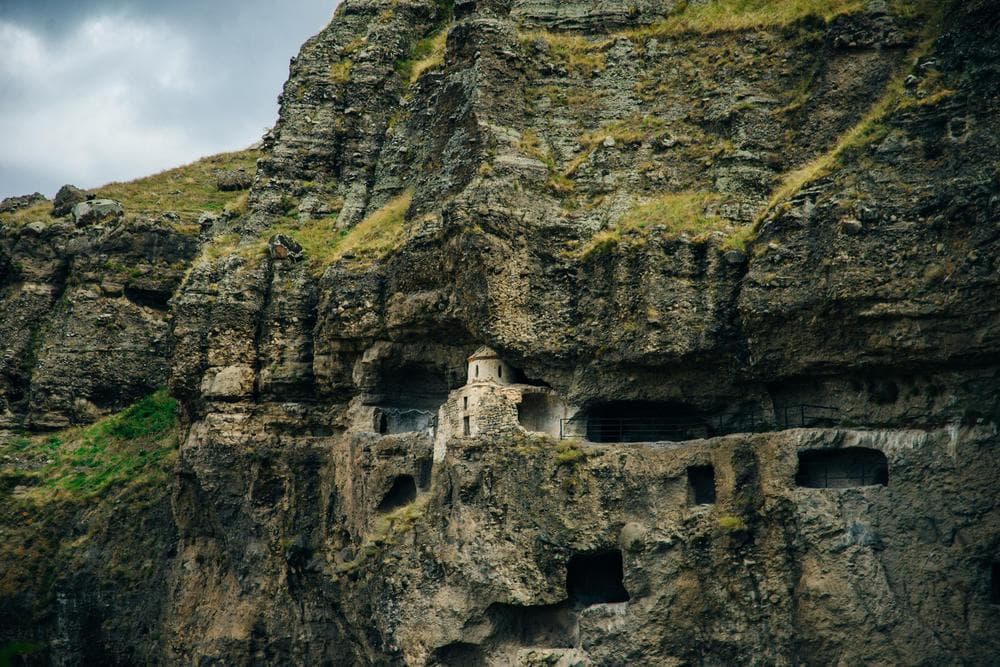
Carved into a volcanic cliff in southern Georgia, Vardzia is a 12th-century cave monastery with 13 levels, frescoed churches, and a story tied to Queen Tamar's golden age.
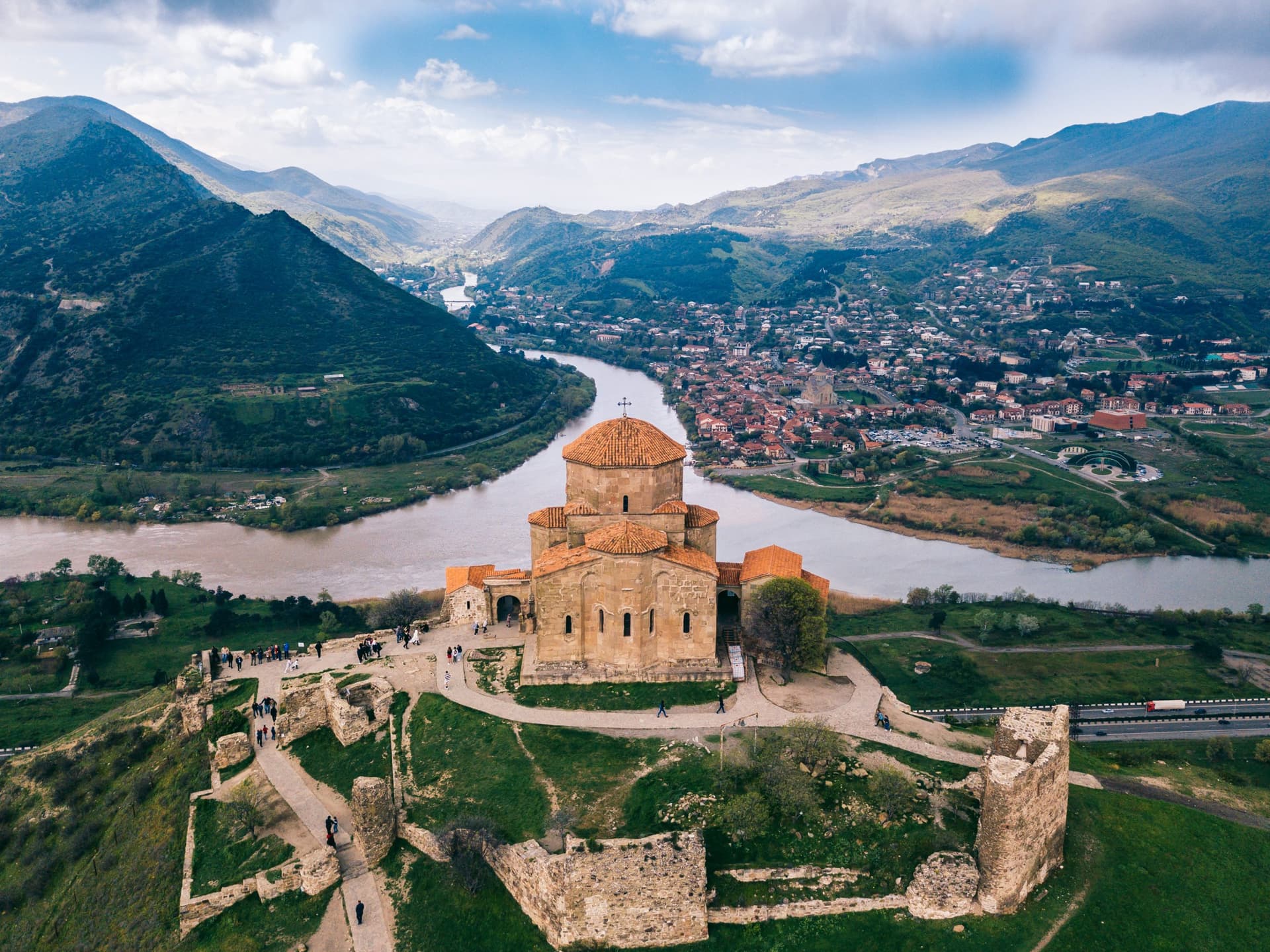
Once the capital of an ancient kingdom, Mtskheta is where Georgian history and Orthodox faith run deepest. Here's what to see, feel, and eat on a day trip from Tbilisi.
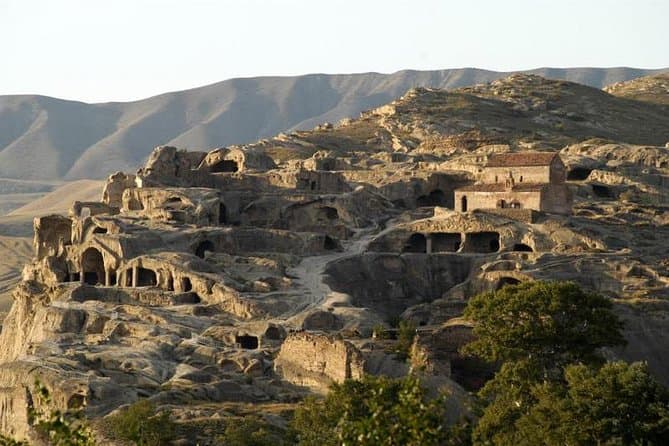
Carved into volcanic rock over 3,000 years ago, Uplistsikhe is one of Georgia's oldest urban sites — pagan temples, secret tunnels, and sweeping views of the Mtkvari River all in one place.
Feels 8°
Wind 4 km/h
5-day forecast
Sun
18°
9°
Mon
19°
9°
Tue
16°
9°
Wed
17°
9°
Thu
10°
7°
Best time to visit
Jun–Sep
Trekking season runs June–September. Roads to Mestia stay open year-round, but high passes close in winter.